In today’s rapidly evolving digital landscape, businesses can no longer rely on traditional methods to remain competitive. Customers expect seamless digital experiences, employees need efficient tools to perform their work, and business leaders require real-time insights to make informed decisions.
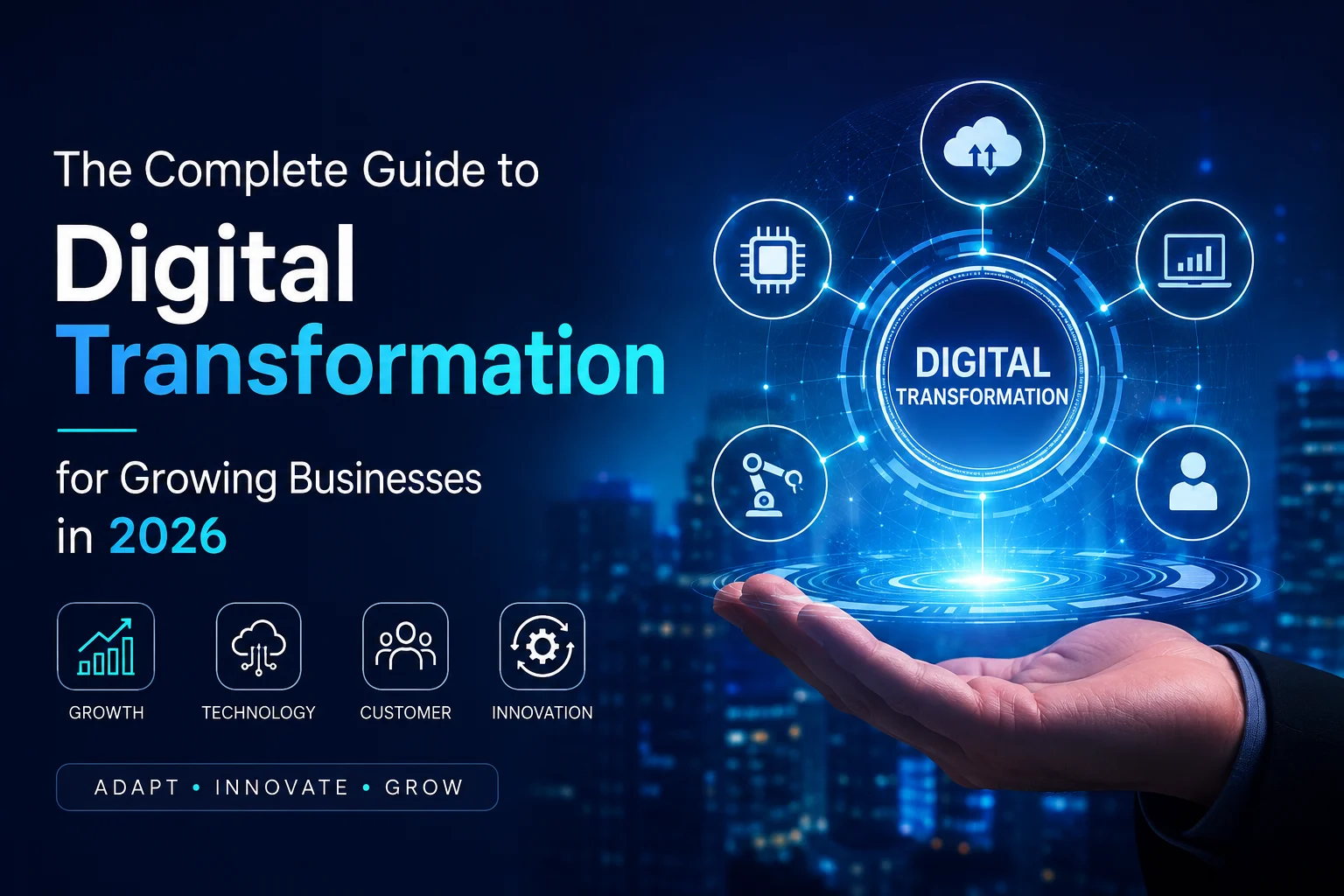
Digital transformation is the process of integrating modern technologies into every aspect of a business to improve operations, enhance customer experiences, and create long-term value. It goes far beyond adopting new software—it’s about changing how a business operates, collaborates, and delivers products or services.
Whether you’re a startup or an established enterprise, digital transformation can help your organization become more agile, efficient, and future-ready.
In this guide, we’ll explore what digital transformation is, why it matters, the technologies driving it, common challenges, and how businesses can successfully implement a digital transformation strategy.
What Is Digital Transformation?
Digital transformation is the strategic use of digital technologies to improve business processes, products, services, and customer interactions.
Rather than simply replacing paper-based processes with digital ones, digital transformation focuses on creating smarter workflows that increase efficiency and support business growth.
It often includes:
- Custom software development
- Cloud computing
- Business process automation
- Artificial Intelligence (AI)
- Data analytics
- Mobile applications
- Customer portals
- CRM and ERP systems
- API integrations
Successful digital transformation aligns technology investments with business objectives.
Why Digital Transformation Matters
Businesses across every industry face increasing competition and changing customer expectations.
Organizations that embrace digital transformation benefit from:
Improved Operational Efficiency
Modern software automates repetitive tasks, reduces manual errors, and speeds up daily operations.
Employees spend less time on administrative work and more time on activities that drive business growth.
Better Customer Experience
Customers expect quick responses, personalized services, and convenient digital interactions.
Digital solutions such as mobile apps, self-service portals, and AI-powered chatbots improve customer satisfaction while strengthening brand loyalty.
Data-Driven Decision Making
Instead of relying on assumptions, businesses can use real-time dashboards and analytics to monitor performance, identify trends, and make informed strategic decisions.
Increased Business Agility
Digital businesses can quickly respond to market changes, customer demands, and new opportunities by adapting systems and processes more efficiently.
Long-Term Cost Savings
Although digital transformation requires an initial investment, automation and optimized workflows reduce operational costs over time.
Key Technologies Driving Digital Transformation
Artificial Intelligence (AI)
AI helps businesses automate tasks, analyze data, predict customer behavior, and improve decision-making.
Examples include:
- Customer support chatbots
- Sales forecasting
- Marketing automation
- Document processing
- Predictive analytics
Cloud Computing
Cloud platforms enable businesses to securely access applications and data from anywhere.
Benefits include:
- Lower infrastructure costs
- Better scalability
- Improved collaboration
- Automatic updates
- Disaster recovery
Business Process Automation
Automation eliminates repetitive manual tasks such as invoice processing, employee onboarding, inventory updates, and approval workflows.
This increases productivity while reducing human error.
Customer Relationship Management (CRM)
A CRM system centralizes customer information, sales activities, and communication history.
Businesses gain a complete view of every customer relationship, helping improve service quality and increase sales.
Enterprise Resource Planning (ERP)
ERP software integrates finance, inventory, procurement, HR, and operations into a single platform.
This eliminates data silos and improves organizational efficiency.
Industries Benefiting from Digital Transformation
Healthcare
- Digital patient records
- Online appointment booking
- Telemedicine
- Automated billing
Retail
- E-commerce platforms
- Inventory management
- Personalized recommendations
- Customer loyalty programs
Manufacturing
- Production monitoring
- Predictive maintenance
- Supply chain visibility
- Quality control
Logistics
- Fleet management
- Route optimization
- Shipment tracking
- Warehouse automation
Financial Services
- Digital onboarding
- Fraud detection
- Online payments
- Risk management
Signs Your Business Needs Digital Transformation
Your organization may be ready for digital transformation if:
- Employees rely heavily on spreadsheets
- Data is stored in multiple disconnected systems
- Manual processes consume excessive time
- Customer service response times are slow
- Reporting is difficult or inaccurate
- Existing software no longer supports growth
- Collaboration between departments is inefficient
Addressing these issues with modern technology can improve productivity and customer satisfaction.
Common Challenges
While digital transformation offers significant benefits, businesses often encounter challenges such as:
- Resistance to organizational change
- Legacy systems that are difficult to integrate
- Limited technical expertise
- Budget constraints
- Cybersecurity concerns
- Poor data quality
A clear roadmap and an experienced technology partner can help overcome these obstacles.
How to Build a Successful Digital Transformation Strategy
Step 1: Assess Your Current Processes
Identify inefficient workflows, bottlenecks, and opportunities for automation.
Step 2: Define Business Goals
Set measurable objectives such as reducing costs, increasing productivity, improving customer satisfaction, or accelerating growth.
Step 3: Prioritize High-Impact Projects
Focus first on projects that deliver quick wins and measurable business value.
Step 4: Choose the Right Technology
Select scalable solutions that integrate with your existing systems and support future growth.
Step 5: Train Your Team
Provide employees with the knowledge and resources they need to adopt new technologies successfully.
Step 6: Measure Results
Track key performance indicators (KPIs) such as operational efficiency, customer satisfaction, revenue growth, and cost savings to evaluate success.
Why Choose Codeska?
Codeska helps businesses embrace digital transformation through innovative technology solutions tailored to their unique needs.
Our services include:
- Custom Software Development
- Web Development
- Mobile App Development
- Business Process Automation
- CRM & ERP Development
- Cloud Solutions
- API Integration
- UI/UX Design
- Ongoing Support & Maintenance
We partner with businesses to modernize operations, improve customer experiences, and build scalable digital solutions that drive long-term success.
Frequently Asked Questions
What is the first step in digital transformation?
The first step is evaluating your current business processes to identify inefficiencies and determine where technology can create the greatest impact.
Is digital transformation only for large companies?
No. Small and medium-sized businesses can benefit significantly from digital transformation by improving efficiency, reducing costs, and enhancing customer experiences.
How long does digital transformation take?
The timeline depends on the size and complexity of the project. Many businesses implement digital transformation in phases to minimize disruption.
What technologies are essential for digital transformation?
Common technologies include cloud computing, AI, CRM systems, ERP software, business automation tools, mobile applications, and data analytics platforms.